14 September 2026
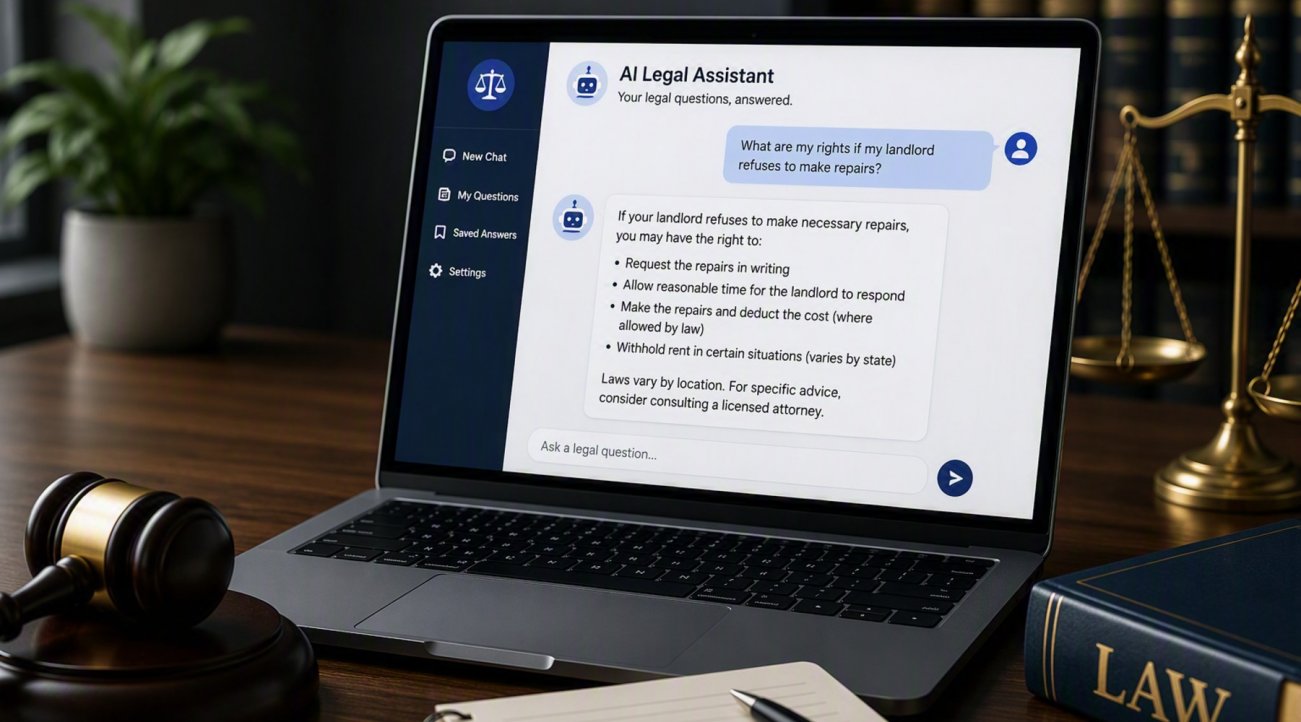
AI can get things wrong....
There is another important issue: AI does not always give the correct answer. AI systems can produce answers that sound confident and convincing but are inaccurate, incomplete or based on incorrect information. This is particularly important when dealing with legal matters.
An AI tool may:
The fact that an AI-generated answer sounds convincing does not make it legally correct.
This is not simply a theoretical concern. In August 2026, the Solicitors Regulation Authority (SRA) issued a warning about the misuse of AI, highlighting concerns around inaccurate AI-generated information and confidential client information being entered into public AI tools.
Read the SRA's warning notice: Misuse of AI – SRA Warning Notice
Your circumstances matter
Legal advice is rarely as simple as asking a question and receiving a single correct answer. Two people can ask almost identical questions but receive different legal advice because their circumstances, documents or objectives are different.
A solicitor can consider the information available, ask questions, examine the relevant documents and apply the law to your particular circumstances. An AI chatbot cannot replace that professional relationship.
What information should you avoid putting into AI?
As a general rule, think carefully before entering any personal, confidential or sensitive information into a public AI tool. In particular, avoid entering:
Personal information
Names, addresses, dates of birth, contact details and other information that could identify you or someone else.
Financial information
Bank details, account information, income, debts or other financial records.
Legal information
Details of your case, correspondence, legal advice, court documents, contracts or other confidential information.
Information about other people
Remember that information about someone else may also be personal or confidential.
Documents from your solicitor
If you want help understanding something we have sent you, please ask us rather than uploading it to an AI service.
The Information Commissioner's Office (ICO) also provides guidance on how data protection law applies to AI systems that process personal data.
Read the ICO's guidance: AI and data protection – ICO guidance
What if I've already entered information?
If you have already copied personal or confidential information into an AI tool, don't panic. However, you should consider what information you provided and which service you used.
If you are concerned that you may have disclosed particularly sensitive or confidential information, you should consider contacting us for advice about your particular circumstances.
AI can be useful, but use it carefully. We're not suggesting that people should never use AI. AI can be a useful tool for general information, brainstorming or helping to explain everyday concepts.
The important thing is to understand its limitations and think carefully about what you are putting into it and whether you can rely on what it gives back. If your question relates to your legal matter, the safest approach is to speak to your solicitor.
Our advice
Before putting something into an AI chatbot, ask yourself:
Would I be comfortable giving this information to a third party? If the answer is no, don't enter it.
And if you are trying to understand something we've sent you, ask us instead of asking AI. We're here to provide advice based on your individual circumstances, not a computer-generated answer.